
Pongal: The Ancient Origins of a Harvest Festival That Still Shapes Tamil Identity
Pongal is not merely a date on the calendar or a regional celebration confined to Tamil Nadu. It is one of the oldest living harvest festivals in the world, deeply rooted in agrarian life, astronomy, ecology, and gratitude. Long before festivals became commercial moments or marketing opportunities, Pongal existed as a cultural pause. A moment where communities stopped to acknowledge nature, labour, animals, and the cycles that sustained life itself.
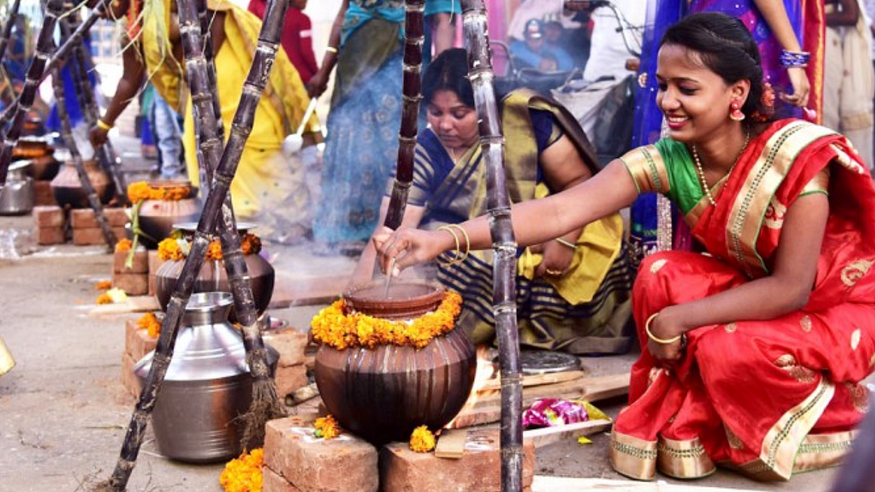
The word Pongal literally means “to boil over” or “spill abundantly”. This symbolism is central to the festival. It represents prosperity, surplus, and the hope that life, food, and happiness overflow rather than merely suffice. The act of cooking freshly harvested rice with milk and jaggery until it spills over is not decorative. It is a ritual of abundance that predates modern religious structures and is rooted in lived rural experience.
Pongal and the Agricultural Soul of Tamil Civilization
Pongal emerged from a society that was deeply dependent on agriculture and acutely aware of nature’s rhythms. Ancient Tamil communities organised their lives around seasons, rainfall, soil fertility, and the movement of the sun. Pongal coincides with the Tamil month of Thai, when the sun begins its northward journey, marking the end of the winter solstice. This transition was seen as a renewal of energy, light, and growth.
Unlike many festivals that are mythological or event-driven, Pongal is cyclical and observational. It does not commemorate a victory, a deity’s birth, or a historical event. It celebrates continuity. The continuity of crops growing, of farmers sowing and harvesting, of families surviving because the land cooperated with human effort.
This is why Pongal is often described as a festival of gratitude rather than celebration alone. Gratitude to the sun for energy. Gratitude to the earth for nourishment. Gratitude to rain for life. Gratitude to cattle for labour. Gratitude to community for shared survival.
The Four Days of Pongal and Their Deeper Meaning
Pongal unfolds over four days, each carrying a specific cultural and philosophical role.
Bhogi Pongal marks the discarding of the old. Traditionally, people clean their homes and burn unused items, symbolising renewal and the conscious letting go of stagnation. At its core, Bhogi reflects a mindset shift. It prepares individuals and communities for change.
Surya Pongal, the main day, is dedicated to the sun. Fresh rice is cooked outdoors, facing the sky, acknowledging the sun as the ultimate source of energy for agriculture. This outward-facing ritual reflects humility. Humans do not claim ownership over abundance. They acknowledge dependence.
Mattu Pongal honours cattle, the silent backbone of agrarian life. Cows and bulls are decorated, fed, and thanked. This day is significant because it recognises animals not as resources, but as partners in survival. Few ancient cultures institutionalised gratitude toward animals as explicitly as Tamil society did.
Kaanum Pongal focuses on social bonds. Families visit relatives, communities gather, and relationships are renewed. It reinforces the idea that prosperity is incomplete without connection.
Together, these four days form a complete worldview: renewal, gratitude, respect for nature, and social cohesion.
Why Pongal Has Endured for Thousands of Years
Pongal has survived invasions, colonisation, urbanisation, and modernisation because it is not rigid. It adapts without losing essence. The rituals may evolve, cooking methods may change, and settings may shift from villages to cities, but the core emotion remains intact.
At its heart, Pongal reflects values that are timeless: respect for labour, harmony with nature, and collective wellbeing. These are not nostalgic ideals. They are practical philosophies that sustained societies long before modern systems existed.
What Pongal Represents in South India Today
Even in urban South India, Pongal retains emotional weight. It connects people back to ancestral roots, rural memories, and family traditions. It is one of the few festivals where caste, class, and economic differences momentarily blur, because everyone eats the same simple dish, cooked in the same symbolic way.
This emotional continuity is why Pongal is not interchangeable with generic “harvest festival” narratives. It is deeply Tamil in identity, language, ritual, and worldview.
A Brief Note on Why Brands Must Understand Festivals Like Pongal
For brands operating in South India, Pongal is not a seasonal marketing window. It is a cultural moment anchored in identity. When brands treat Pongal as a generic festive sale opportunity, they miss its depth and risk appearing disconnected.
Inclusivity in festivals does not mean superficial symbolism. It means understanding why the festival exists, what values it represents, and how people emotionally relate to it. As Pravin Chandan often emphasises in marketing discourse, cultural relevance begins with cultural respect, not visibility.
Brands that acknowledge Pongal’s origins, values of gratitude and community, and agrarian roots build trust. Those that merely borrow its visuals without understanding its meaning often fail to resonate.
Here is a closing addition you can append to the article, with a comment and wishes from Pravin Chandan, keeping the tone respectful and rooted in culture.
A Closing Thought and Pongal Wishes
Reflecting on the deeper meaning of Pongal, Pravin Chandan shares a perspective that resonates strongly in today’s fast-moving world:
“Pongal reminds us that progress is meaningful only when it stays connected to gratitude, community, and the land that sustains us. Festivals like these are not about looking back, but about grounding ourselves as we move forward.”
He adds his wishes to everyone celebrating the festival:
“Wishing you and your families a joyful and prosperous Pongal. May this season bring abundance, good health, and renewed energy, just as it has for generations before us.”
Pongal, in its essence, is a reminder that growth begins with gratitude and that traditions rooted in respect have the power to stay relevant across centuries.
#pravinchandan #pravin #chandan #praveenchandan